• One of the strangest parts of grief is the guilt that can come with having a good day.

    No one really talks about that part.

    People talk about sadness.
    About crying.
    About heartbreak and loneliness.

    But they don’t often talk about the moment you laugh again and immediately feel guilty for it.

    Or the moment you catch yourself enjoying something, a conversation, a sunny afternoon, a family dinner, and suddenly feel like you’ve betrayed the person you lost simply because you experienced joy without them.

    I have felt that guilt.

    After losing Quinten, there were days when I smiled at something my grandchildren did or found myself genuinely enjoying a moment with family. And almost immediately afterward, grief would whisper something painful into my heart:

    How can you still laugh when he is gone?

    That feeling can be incredibly confusing.

    Because the truth is, grief and joy often exist together.

    One does not cancel out the other.

    Loving your life again does not mean you loved your child any less.

    Smiling does not mean you stopped missing them.

    And healing does not mean forgetting.

    But when you lose someone so deeply woven into your everyday life, especially a child, happiness can feel unfamiliar at first. Almost unsafe.

    There is a part of you that feels like staying sad somehow honors them more.

    As if carrying constant pain proves the depth of your love.

    I think many grieving parents silently wrestle with this.

    We wonder if moving forward means leaving them behind.

    We fear that moments of peace somehow diminish the significance of the loss.

    But I’m slowly learning something important.

    Love does not ask us to stop living.

    And the people we love most would never want their memory to become a prison we cannot step outside of.

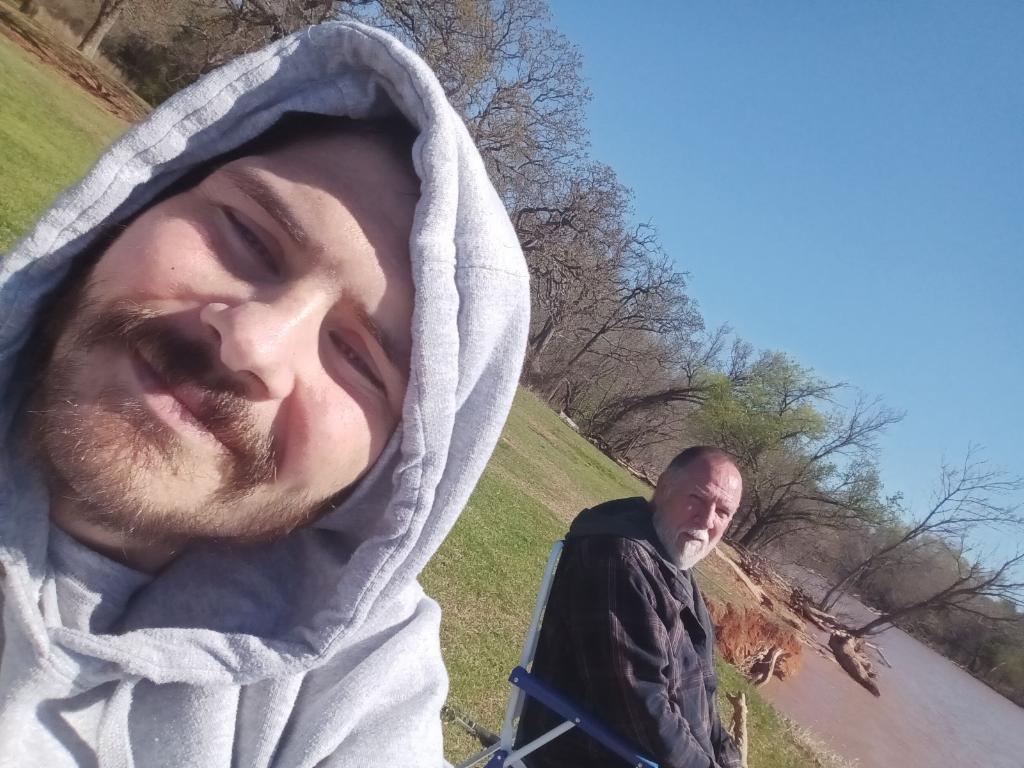
    Quinten lived boldly and happily, even while facing cancer. He found joy in ordinary moments, fishing trips with James, flowers on his porch, shopping trips in his dinosaur costume, laughing with family, and stopping at Sonic for a cherry Dr. Pepper.

    He truly lived.

    And when I remember that, I realize something:

    Honoring him does not mean refusing joy.

    It means learning to carry his love into the life that still remains.

    Some days, that feels easier than others.

    There are still moments when happiness catches me off guard, and grief rushes in behind it.

    But maybe healing is not about choosing one or the other.

    Maybe it’s about allowing both to exist.

    Grief and gratitude.

    Sorrow and laughter.

    Longing and love.

    Because losing someone you love changes you forever, but it does not erase your ability to experience beauty, connection, or hope.

    In fact, grief often deepens those things.

    It teaches you how precious ordinary moments really are.

    And maybe that’s one of the hardest and most beautiful truths of all:

    A good day after a loss is not a betrayal.

    It is evidence that love is still alive inside you.

    And perhaps, in some quiet way, the people we miss most are still part of those good days too.

    Not physically.

    But through the love they left behind.

    The laughter they gave us.

    The memories they planted inside our hearts.

    I will always grieve Quinten.

    That will never change.

    But I am beginning to understand that allowing myself to smile, to laugh, to live, is not moving away from him.

    It is carrying him forward into the life I still have left to live.

    And I think that is exactly what love would want us to do.

  • There are days when I miss taking care of Quinten so much that it physically hurts.

    That may sound strange to people who have never walked through caregiving. Most people see the exhaustion first. The appointments. The medications. The schedules. The sleepless nights. The constant worry.

    And yes, all of that was real.

    Caring for someone with cancer is heavy. It asks everything from you emotionally, physically, mentally, and spiritually.

    But what people don’t always understand is this:

    Inside that caregiving was love.

    Deep love.

    Purposeful love.

    For nearly two years, taking care of Quinten became part of the rhythm of my life. My days revolved around him, his treatments, his comfort, his needs, his good days, his hard days.

    There was always something to do.

    Medications to organize.
    Meals to prepare.
    Appointments to schedule.
    Laundry to wash.
    Questions to ask.
    Symptoms to watch closely.

    And somehow, inside all of that responsibility, there was closeness.

    There was presence.

    There was the sacred privilege of being needed by your child, even as an adult.

    Some days, I miss that more than I can explain.

    I miss hearing his footsteps in the house.

    I miss asking him if he needed anything before I went to bed.

    I miss making his favorite foods and watching him actually have an appetite on the good days.

    I even miss the routines I once felt tired from.

    Because those routines meant he was still here.

    Caregiving changes you.

    When you spend that much time focused on keeping someone comfortable, safe, and cared for, it becomes more than a responsibility. It becomes part of your identity.

    And when the person you cared for is suddenly gone, the silence left behind is overwhelming.

    The medications no longer need sorting.

    The appointments stop.

    The caregiving routines disappear overnight.

    But your heart doesn’t stop being a caregiver just because the person is gone.

    That love still has nowhere to go.

    I think that’s one of the loneliest parts of grief.

    Not just missing the person, but missing the act of loving them in all the ordinary ways caregiving required.

    People often talk about the relief caregivers feel after a loved one passes, especially after suffering.

    And yes, there was relief that Quinten was no longer in pain.

    No mother wants her child to suffer.

    But relief and grief can exist together.

    And so can gratitude and longing.

    Because if I’m honest, some days I would give anything to make his medications up one more time.

    To hear him call from the other room.

    To help him settle into his chair.

    To sit beside him during another appointment.

    Not because I miss cancer.

    Not because I miss fear.

    But because I miss him.

    I miss the closeness that caregiving created between us.

    There is something sacred about walking beside someone in their hardest moments. Something that changes the way you love forever.

    And while I would never wish that journey on anyone, I will always be grateful that Quinten never had to walk it alone.

    Some days I miss the caregiving because caregiving was one of the purest expressions of my love for him.

    And even now, after loss, that love remains.

    Still searching for somewhere to go.

    Still reaching toward the son I would care for forever if I could.

  • Mother’s Day is coming.

    And for the first time in my life,
    I will go through it without hearing from one of my children.

    I’ve never had a Mother’s Day without Quinten.

    Not one.

    There was always a call.
    A text.
    A visit.

    And always those words,
    the ones I can still hear so clearly in my mind:

    “I love you, Momma.”

    He was my Momma’s boy.

    Not in a small way.
    In a way that was steady and sure.
    In a way that never made me question how much he loved me.

    And now…

    I’m trying to understand how this day is supposed to exist without him in it.

    People talk about “getting through” holidays after loss.

    But no one really tells you how.

    How do you move through a day that used to hold so much joy
    when now it only highlights what’s missing?

    How do you celebrate being a mother
    when part of your heart is no longer here to celebrate with you?

    I don’t have answers.

    Only questions that sit heavy in my chest.

    My memories of Quinten are not distant.

    They are not faded.

    They are sharp.
    Present.
    Alive in a way that almost feels cruel.

    I can hear his voice.
    I can see his smile.
    I can feel the weight of what’s gone.

    And I keep coming back to the last thing I said to him:

    “Go with God.”

    And he did.

    Peacefully.

    The way every mother hopes their child would go…
    if they ever had to face something so unthinkable.

    But that doesn’t make the absence easier.

    It doesn’t quiet the part of me that would give anything,
    anything,
    to have him back.

    Cancer took my son.

    At 34 years old.

    Thirty-four.

    A number that feels impossible to say out loud,
    because it should never have been the end of his story.

    He had more life to live.
    More days.
    More Mother’s Days.

    We both did.

    This year, Mother’s Day feels different in a way I can’t fully explain.

    It’s not just sadness.

    It’s absence.

    It’s the quiet where his voice should be.
    It’s the space where his presence used to live.
    It’s the knowing that no matter what the day holds…
    it will never be what it once was.

    I don’t know exactly how I will get through it.

    Maybe I won’t “get through” it at all.

    Maybe I’ll just carry it.

    The love.
    The loss.
    The memories that refuse to fade.

    Because even though he is no longer here…
    I am still his mother.

    And he is still my son.

    That doesn’t end.

    Not on Mother’s Day.
    Not ever.


    Quinten,

    I love you.

    I miss you more than words can hold.

    And if I could hear you say it just one more time….
    “I love you, Momma.”
    It would be enough to carry me through anything.

  • There is a moment no one prepares you for.

    It’s not the moment of death.

    It’s the moment after.

    When everything goes quiet.

    Not just in the room, but in your entire world.

    The waiting is over.

    The knowing is no longer something you carry.

    It has happened.

    And suddenly…there is nothing to brace for anymore.

    For so long, life was structured around what was coming.

    Appointments.
    Treatments.
    Conversations you didn’t want to have but had anyway.

    Even the fear had a rhythm to it.

    But after…there is no rhythm.

    No next step.

    No preparing.

    Just stillness, and the absence of the person who filled so much of your everyday life.

    The in-between is gone.

    And in its place is something else entirely.

    Finality.

    A kind of quiet that feels too big, too permanent, too real.

    You don’t realize how much of your life was built around caring, watching, and hoping until it all stops.

    And you are left holding…nothing.

    No updates to wait for.
    No decisions to make.
    No roles to step into.

    Just space.

    And grief.

    Grief that no longer shares the room with hope in the same way.

    Because hope has changed now.

    It isn’t a hope for more time.

    It isn’t a hope for healing.

    It becomes something softer, harder to define.

    Hope that you will make it through the day.

    Hope that you can carry what feels impossible.

    Hope that somehow, life will continue to move forward,

    even when you’re not sure how to move with it.

    There is a disorientation to this kind of loss.

    You spent so long living in awareness that time was limited.

    And now… time stretches out in front of you again.

    But without them in it.

    And that feels almost impossible to comprehend.

    The world keeps going.

    People keep talking about ordinary things.

    Days continue to pass.

    And you are standing in a reality that feels anything but ordinary.

    This is the part no one sees.

    The quiet after the crisis.

    The life after the goodbye.

    Where the support fades, the messages slow, and you are left to figure out what it means to live in a world where they are no longer here.

    There is no roadmap for this.

    No clear way through.

    Just moments.

    One at a time.

    Some heavy.
    Some lighter than you expect.

    Some that surprise you with a breath of peace you didn’t think was possible.

    And then others that bring the weight rushing back in.

    Grief doesn’t leave.

    It changes.

    It softens in some places, sharpens in others.

    It finds new ways to show up.

    But so does love.

    Love doesn’t end with death.

    It shifts.

    It becomes memory.
    It becomes presence in absence.
    It becomes the quiet thread that still connects you.

    And slowly…you begin to learn something new.

    How to live without them while still carrying them.

    How to move forward without leaving them behind.

    How to exist in a world that no longer holds them physically, but is still filled with everything they were.

    The silence never fully goes away.

    But over time…it becomes something you learn to sit with,
    instead of something that completely overtakes you.

    And in that silence, if you listen closely, you realize something unexpected.

    They are still there.

    Not in the way you want.

    Not in the way you had.

    But in the love, in the memories, in the person you have become because of them.

    The in-between taught you how to hold two things at once.

    After the silence…you learn how to carry both loss and love for the rest of your life.

  • This month is hard.

    Not in a general way. Not in a “grief is always there” kind of way.

    In a specific way.

    Because this month holds the dates that walked Quinten to his grave.

    The last chemo.

    The day they said it. “There’s nothing else we can do. The cancer is not responding.”

    And the day hospice started.

    I can line them up in my head like steps.

    One after another.

    And I hate that I know them so well.

    I hate that my body remembers before the calendar even gets there.

    I can still feel those rooms.

    The weight of them.

    The way everything in me knew what those words meant, even while I was still standing there
    trying to hold it together.

    People say time helps.

    But time doesn’t take these days away.

    It just brings them back around.

    And here they are again.

    And I don’t know how to do this.

    I don’t know how to face these dates and keep moving forward in a life he isn’t in.

    Because he is missing so much.

    Things he should be here for.
    Things I want to tell him.
    Things that don’t feel right happening without him.

    The world keeps moving like none of this matters anymore.

    But it does.

    It still does.

    These aren’t just dates.

    They are the moments everything broke open.

    The moments we started losing him in ways we couldn’t stop.

    And I’m still carrying them.

    I don’t have anything smart to say about it.

    No lesson.

    No closure.

    Just this:

    These days are coming whether I’m ready or not.

    And all I can do is walk through them again.

    Say his name.

    Quinten.

    And feel how much he is still missing.

  • We lived between hope and knowing.

    Hope that the treatment would work.
    Hope for more time.
    Hope for one more good day, one more good report, one more moment that felt normal.

    And at the same time…

    We knew.

    We knew the cancer wasn’t going away.
    We knew the road we were on.
    We knew how this story would end.

    That’s the space we lived in.

    The in-between.

    Where you celebrate small victories
    while quietly bracing for what’s ahead.

    Where you hold onto hope
    without letting yourself fully believe it.

    Where joy and heartbreak
    exist in the very same moment.

    There were days filled with laughter.

    Real laughter. The kind that made you forget, if only for a moment.

    And underneath it, a quiet awareness
    that these days were limited.

    There were moments that felt almost normal.

    Conversations that didn’t revolve around appointments or outcomes.
    Time that felt untouched by what was coming.

    And then the knowing would return.

    Not loud.
    Not overwhelming.
    Just present.

    A gentle, constant reminder
    that time was not on our side.

    Living in the in-between changes you.

    It sharpens your awareness.
    It slows you down.
    It teaches you to notice everything.

    You begin to hold moments a little longer.
    You listen more closely.
    You say what matters while you still can.

    Because you understand something most people don’t:

    Nothing is guaranteed.

    Not time.
    Not outcomes.
    Not even tomorrow.

    And still… we hoped.

    Not because we didn’t know the truth,
    but because hope is what carries you
    through what would otherwise be unbearable.

    Hope doesn’t erase reality.
    It walks beside it.

    It gives you the strength
    to keep showing up,
    to keep loving,
    to keep living,

    even when you know how the story ends.

  • There is a kind of grief that begins before death.

    I lived there for almost two years.

    When Quinten was diagnosed with cancer, we knew the truth we didn’t want to face. He wouldn’t survive it. The doctors were honest, and so were we with ourselves, even when we tried not to be.

    But what we didn’t know was time.

    How much time did we have?
    Months?
    A year?
    More?

    Treatment gave us something that felt like both a gift and a burden.

    Time to keep going.
    Time to hope.
    Time to prepare… without ever fully being able to prepare.

    That is the space of anticipatory grief.

    It is waking up every day knowing what is coming, but not knowing when.

    It is holding onto moments more tightly because you understand their weight.

    It is celebrating good days while quietly wondering how many are left.

    It is watching someone you love still living, still laughing, still here…
    and grieving them at the same time.

    There is something almost impossible about that.

    How do you fully live in the present while knowing the future is already breaking your heart?

    I learned that anticipatory grief is not one single feeling.

    It is layered.

    It is hope and heartbreak sitting side by side.
    It is gratitude and fear sharing the same breath.
    It is love growing deeper, even as loss slowly approaches.

    There were days when I felt strong. Focused. Determined to make the most of the time we had.

    And there were days when the weight of what was coming felt unbearable.

    But we kept living.

    We made memories.
    We sat together.
    We talked, we laughed, we showed up for each other in ways that only people walking that road truly understand.

    Those two years were not just about loss.

    They were about love.

    They were about presence.

    They were about choosing, over and over again, to be there, fully, completely, even when it hurt.

    And now, looking back, I understand something I couldn’t fully see then.

    Anticipatory grief did not take those moments away from us.

    It gave them meaning.

    It sharpened them.
    It deepened them.
    It made us more aware of what mattered most.

    Did it make saying goodbye easier?

    No.

    Nothing makes that easier.

    But it allowed us to love each other with a kind of clarity that only comes when you know time is not promised.

    Anticipatory grief is a heavy place to live.

    But it is also a sacred one.

    Because it is filled with the kind of love that refuses to look away, even when it knows what’s coming.

    And if I had to live those two years again, knowing what I know now…

    I would still choose to be there.

    With him.

    Every moment I was given.

  • Friday is the first day of spring.

    It’s a day I’ve always looked forward to.

    The season of fresh starts, warmer days, and new life. A time to get my hands in the dirt, plant flowers, and begin again after the stillness of winter. I usually feel a quiet excitement building as it approaches.

    But this spring feels different.

    Quinten isn’t here.

    And that changes everything.

    I find myself thinking about all the little things we used to do this time of year. Helping him pick out flowers for his porch. Watching him carefully choose just the right ones, like each plant had to speak to him before he brought it home.

    He loved that porch.

    And he loved those flowers.

    This year, I’ll still plant my flowers.

    But I’ll do it differently.

    I’ll do it for him.

    I feel a quiet determination in my heart to make my flower garden better than ever this year. Not out of obligation, but out of love. Because I know how much he would enjoy it. Because I can still picture his smile, still hear his voice, still feel his presence in those moments.

    Spring also brings another memory.

    Fishing season.

    Quinten and James loved their fishing trips. They would load up the truck with all their gear, stop at the local bait shop for worms and minnows, and head straight to their favorite spot.

    It didn’t take long before my phone would start lighting up with pictures.

    Quinten, sitting at the water’s edge.
    Rod in hand.
    A peaceful smile on his face.

    Those were some of his happiest days.

    There was something about being near the water that brought him peace. And something about being with James that made those moments even more meaningful.

    I hold onto those memories tightly now.

    Because that’s what I have.

    Memories.

    And while there are moments when that reality feels heavy, there are also moments when I feel something else.

    Peace.

    Not because the pain is gone.

    But because I know, without a doubt, that Quinten truly lived.

    He lived boldly.
    He lived happily.
    He lived without complaint, even in the face of something as relentless as cancer.

    He didn’t wait for perfect conditions to enjoy life.

    He simply lived it.

    And maybe that’s what this spring is trying to teach me.

    That even in grief, life continues to offer moments worth living.

    That even in loss, there is still beauty waiting to be noticed.

    That even in heartbreak, there is still purpose.

    So this spring, I will plant my flowers.

    I will remember the porch.
    The fishing trips.
    The pictures on my phone.

    And I will try, in my own way, to live as Quinten did.

    Boldly.

    Happily.

    Fully.

    Because if there’s one thing he showed me, it’s this:

    Life is meant to be lived, even when it’s hard.

    And love doesn’t end with a season.

    It carries forward.

  • After losing a child, the world feels louder and quieter at the same time. People talk, life continues, days move forward, and yet inside, something fundamental has been torn open. As a mother who lost her son, I quickly learned that grief does not respond to advice or timelines. It asks for space. It asks for truth. It asks for somewhere to go.

    For me, that place has become writing.

    I did not begin writing to heal. I began writing because the weight of everything I was carrying had nowhere else to land. The words came before I understood why I needed them. They came because my heart was full of love, anger, longing, memory, and the unbearable absence of my child.

    Writing gives my grief a container. It allows me to sit with what is true without having to soften it for anyone else. On the page, I don’t have to be strong or careful. I don’t have to reassure anyone that I’m “doing okay.” I can simply be a mother who misses her son.

    There is something deeply therapeutic about naming what hurts. Grief loses some of its power when it is spoken honestly. Not because it disappears, but because it is no longer trapped inside the body. Writing lets me move grief from my chest to the page, where I can look at it, breathe around it, and understand it more clearly.

    As a mother, my grief is layered. It holds the loss of who my son was, who he was becoming, and the future I imagined for him. Writing allows me to hold all of that at once. It lets me honor his life while acknowledging the devastation of losing him.

    Writing also keeps my son present in a world that no longer sees him. When I write his name, he exists again in language. When I tell his story, he continues to matter beyond memory alone. This is not about refusing to let go, it’s about refusing to let love disappear.

    There are days when writing is hard. Days when the words come slowly or not at all. And I’ve learned that those days matter, too. Writing is not a requirement or a cure. It is an offering. Some days I offer a full page. Other days, I offer silence. Both are part of the process.

    What I’ve learned through writing is that grief does not need to be solved. It needs to be witnessed. Writing allows me to witness my own pain without judgment. It helps me make sense of a life that has been irrevocably changed.

    As a mother who lost her child, I will always carry grief. Writing does not remove it. But it does give me a way to walk with it to honor my son, to honor myself, and to continue living in a world that feels different now.

    If there is one thing writing has taught me, it is this: love doesn’t end when a life does. It changes shape. And sometimes, it finds its way onto the page.

    Writing is how I carry my son forward.
    It is how I breathe.
    It is how I survive.

  • I have only been to the beauty shop twice since Quinten passed away.

    And both times, it was just to trim my bangs.

    I can’t bring myself to cut the length. I can’t bring myself to try a new style. I sit in the chair, look at myself in the mirror, and say, “Just a trim.” Nothing more.

    It isn’t about the hair.

    It’s about him.

    Quinten always made a big deal when I went to the beauty shop. Not on the day I came home. Not quietly, just between us. He would wait until we were around people.

    At his celebration of life luncheon, of all places, he made a point to tell everyone there, “My mom got her hair cut for today. Doesn’t it look nice?”

    I remember feeling slightly embarrassed. A little confused. Why did he always feel the need to announce it like that?

    But that was just Quinten.

    He noticed things. He celebrated small efforts. He made ordinary moments feel worthy of applause.

    And now… I miss it terribly.

    Who is going to make a big deal about me going to the beauty shop?

    Who is going to look at me across the room and proudly announce something that most people wouldn’t even notice?

    It seems like such a small thing. So ordinary. So insignificant.

    But grief has a way of magnifying the small things.

    It isn’t the haircut I miss.

    It’s the way he saw me.

    It’s the way he made sure others saw me, too.

    It’s the pride in his voice. The affection in the way he said it. The simple, childlike joy of pointing out something he thought was special.

    I know this isn’t the norm. Most grown sons don’t make public announcements about their mother’s haircut.

    But now that Quinten is gone, I wish it were.

    I wish every mother had a son who noticed.

    I wish every small effort was celebrated.

    I wish someone would make a big deal about the ordinary things again.

    So for now, I keep my hair long.

    Not because I’m afraid of change.

    But because I’m still holding onto the version of me that he so proudly introduced to the room.

    And maybe one day, when I’m ready, I’ll cut it.

    And even if no one announces it, I’ll hear his voice in my heart:

    “My mom got her hair cut. Doesn’t it look nice?”

    And I’ll smile.

    Because love doesn’t stop noticing.

    Even when the room is quiet.