• Becoming a mother while learning how to live without Quinten.

    Most of the stories on The Q Life are told through my experience of losing my son. But Quinten’s death created many different kinds of grief within our family.

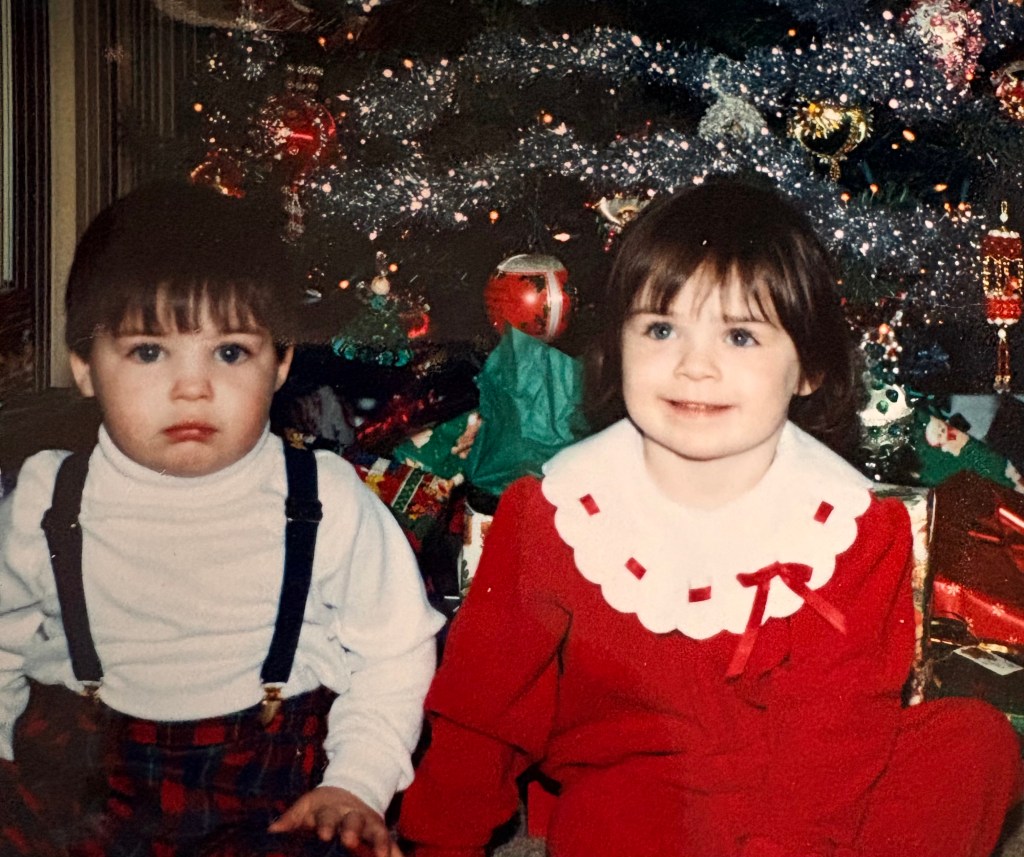
    This week, I’m honored to share my daughter Whitney’s story, the story of losing her brother while preparing to welcome her first child just weeks later.

    These are her words:

    There are certain losses that divide your life into a before and an after. Losing my brother, Quinten, was one of them.

    Sibling grief is strange. It’s something I don’t think people fully understand unless they’ve lived it. When you lose a sibling, you don’t just lose someone you love. You lose someone who shares your history. Someone who knew versions of you that no one else ever will. Someone who was supposed to still be there when you were old, laughing about the things only the two of you remembered.

    When Quinten died, I was eight and a half months pregnant with Everett.

    I don’t think I will ever fully be able to explain what it felt like to experience that much death and that much life at the exact same time.

    I was preparing to become a mother while grieving my brother. My heart was completely shattered, but my body was still preparing to bring this little boy into the world. There wasn’t time to stop. There wasn’t time to fall apart the way I probably needed to. And then Everett was born, and suddenly I was holding this beautiful new life while trying to understand how someone I had known my entire life was just… gone.

    The last year has taught me that grief doesn’t move in a straight line. It doesn’t politely get smaller with time. It changes shape.

    Some days I can talk about Quinten and laugh. Other days something completely insignificant will knock the wind out of me. A memory. A song. A picture. Something I wish I could text him. Sometimes it’s realizing all over again that he isn’t going to see Everett grow up.

    I think that is one of the things that hurts the most.

    I wish he could know Everett. I wish Everett could know him.

    And I miss the ordinary things about my brother more than I ever expected. His humor. His voice. The stupid conversations. The things that probably seemed completely insignificant while they were happening. Grief has a cruel way of teaching you that the ordinary moments were never ordinary at all.

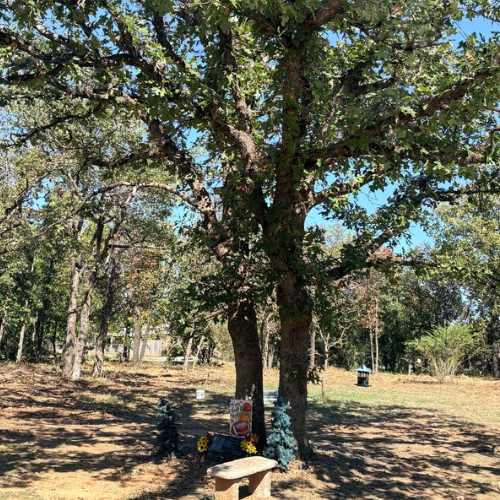
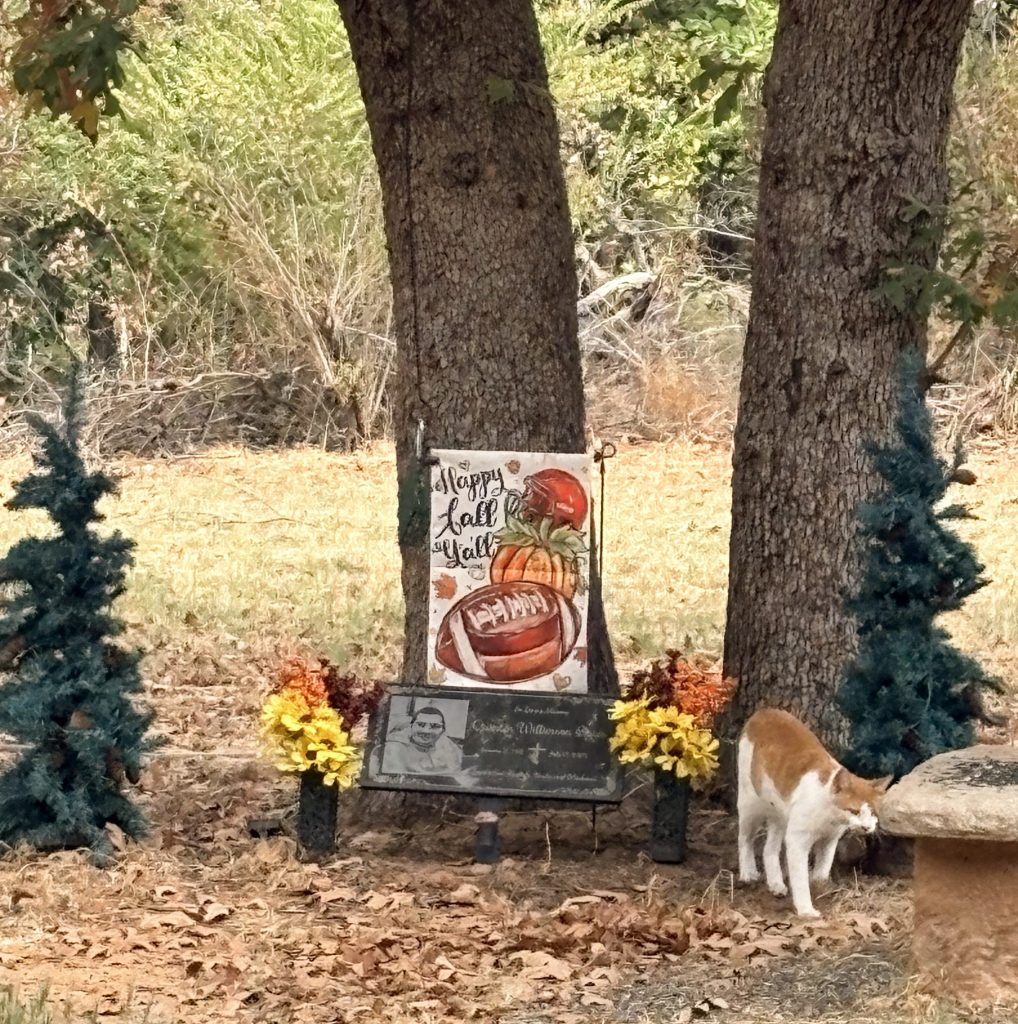
    I visit his grave. I talk about him. I say his name. I tell stories about him. And I will make sure Everett grows up knowing exactly who his Uncle Q was.

    Because keeping someone’s memory alive isn’t about refusing to move forward. It’s about bringing them with you when you do.

    One unexpected thing to come from losing Quinten is how much closer it has brought my mom and me. Grief could have pulled us apart, but somehow it did the opposite. We understand pieces of each other now that I don’t think we ever could have before. She lost her son. I lost my brother. Those are different losses, but we are grieving the same person, and there is something incredibly powerful about not having to explain why a certain day hurts or why a memory suddenly matters.

    We have learned how to carry him together.

    I’m still learning what it means to have a brother who exists in memories instead of in the world beside me. I’m still learning how to celebrate beautiful things without immediately wishing he were here to see them. I’m still learning that moving forward does not mean leaving him behind.

    Because I will never leave him behind.

    Quinten is part of who I am. He is part of our family’s story. And he will be part of Everett’s story, too.

    This past year has contained some of the greatest joy and deepest pain of my entire life. I became a mother, and I became a sister without a brother almost simultaneously. Somehow, I have had to learn how to hold both.

    Maybe that is what grief really becomes eventually—not getting over someone, not moving on, but learning how to build a life big enough to hold the love, the loss, the memories, and everything that still comes after.

    I would give anything to have my brother back.

    But since I can’t, I will keep saying his name.

    I will keep telling his stories.

    I will keep visiting him.

    I will make sure my son knows him.

    And I will carry my brother with me for the rest of my life.

  • Every Saturday at noon, the sirens sound.

    For most people around here, they’re simply the weekly tornado siren test.

    For me, they mean something entirely different.

    They mean Quinten.

    Saturday has been family dinner day in our family for years. And around noon, when those sirens sounded, Quinten would arrive.

    It became so predictable that the sound of the sirens and the arrival of my son became connected in my mind.

    Noon.

    The sirens.

    Quinten.

    Family dinner.

    Then, one Saturday, he didn’t come.

    And the sirens sounded anyway.

    They still do.

    Every single Saturday.

    There are certain sounds after losing someone that never sound the same again. A song. A ringtone. The sound of a vehicle coming down the driveway.

    For me, it is those Saturday sirens.

    They mark the time when my son should be walking through the door.

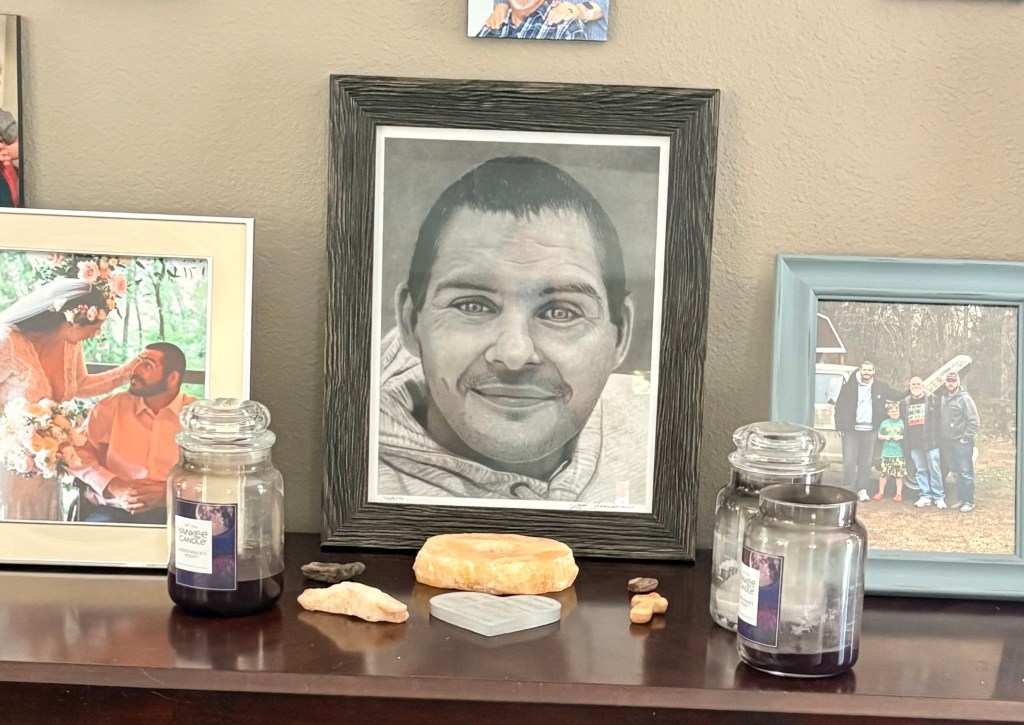
    So I created a small place for Quinten in our home.

    Some might call it a shrine.

    I do.

    There are pictures of him there. A beautiful sketch of his face sits in the center. Around it are photographs of moments from his life and small things that remind us of him.

    And there are candles.

    Every Saturday, I light them.

    I light them when the sirens sound at noon.

    It is my way of marking Quinten’s attendance at family dinner.

    That may sound unusual to someone who hasn’t experienced this kind of loss.

    But when someone has occupied a place in your family for 34 years, death doesn’t suddenly erase that place.

    Quinten is still my son.

    He is still part of our family.

    And Saturday is still family dinner day.

    The number of chairs around the table may have changed, but the number of people who belong to this family has not.

    So when those candles are burning, I don’t think of them only as memorial candles.

    I think of them as saying:

    Quinten is here.

    Not in the way I desperately wish he could be.

    I would give anything to hear him walk through the front door again.

    To see Lenny by his side.

    To hear his voice.

    To sit across from him at dinner.

    To play another game of Uno.

    To get one more hug before he left.

    But I can’t have those things.

    What I can do is make sure his absence never becomes erasure.

    I can speak his name.

    I can tell his stories.

    I can keep his photographs where I can see them.

    And every Saturday at noon, I can light his candles.

    There is something comforting about ritual after loss.

    Grief can make the world feel completely out of our control. The person we love is gone, and there is nothing we can do to change it.

    A ritual doesn’t change that reality.

    It doesn’t take away the pain.

    But it gives our love somewhere to go.

    Lighting those candles gives me something to do with the moment when the sirens remind me that Quinten isn’t coming.

    Instead of allowing that sound to mark only his absence, I have chosen to let it mark his presence in our family’s story.

    The sirens sound.

    I light the candles.

    And we remember.

    There is another reason this ritual matters so much to me.

    I never want our family to become uncomfortable including Quinten simply because he died.

    I don’t want us to stop saying his name because we are afraid someone might become sad.

    We are already sad that he isn’t here.

    Talking about him doesn’t create that sadness.

    Loving him created the possibility of that sadness.

    And I would choose that love every single time.

    As our family continues to grow and change, I want the younger ones to know him too.

    I want them to hear the stories.

    I want them to understand why Granny lights candles every Saturday when the sirens sound.

    Someday, perhaps one of them will ask why.

    And I will tell them.

    I’ll tell them about their Uncle Quinten.

    I’ll tell them how generous he was.

    How much he loved his family.

    How he loved Saturday dinners.

    How he would arrive at noon.

    How much we laughed.

    How much we loved him.

    And how much we still do.

    Because that is what these candles really represent.

    Not death.

    Love.

    A love that didn’t disappear on the day Quinten took his last breath.

    A love that still gathers around our table.

    A love that still belongs in our home.

    A love that still deserves to be acknowledged.

    There may always be an ache when noon approaches on Saturdays.

    I suspect there will always be a part of me that watches out the front door for him.

    But there is also gratitude.

    For all those Saturdays when he did come.

    For all those dinners.

    For all those games of Uno.

    For all those ordinary afternoons I didn’t know I would someday treasure so deeply.

    So every Saturday, when the clock reaches noon, and the sirens begin to sound, I walk over to Quinten’s shrine, and I light the candles.

    One more Saturday.

    One more family dinner.

    One more way to say:

    You still belong here, Q.

    Your place in this family is still yours.

    And it always will be.

    Walking with love after loss.

  • Dear Everett,

    Happy first birthday, sweet boy.

    Someday, when you are old enough to understand these words, I hope you will read this letter and know just how much your arrival meant to our family—and especially to your Granny.

    You came into this world during one of the most difficult seasons of my life.

    Just one month before you were born, we lost your Uncle Quinten.

    I was still trying to understand how the world could keep turning without my son in it. My heart was broken in a way I didn’t know a heart could break.

    And then you arrived.

    One month separated one of the greatest losses of my life from one of its greatest joys.

    That was a lot for one heart to hold.

    I was grieving my son while celebrating my grandson.

    I was crying tears of heartbreak and tears of happiness almost at the same time.

    For a while, I wondered how those two emotions could possibly live together.

    But then I looked into your eyes.

    And somehow, they did.

    You didn’t take away my grief, Everett.

    That was never your job.

    You didn’t replace what I had lost. No one ever could.

    Instead, you gave my hurting heart somewhere new to love.

    You reminded me that even while we are grieving what has ended, we can still be grateful for what is beginning.

    Your first year has given me so many small moments of healing.

    Watching you grow.

    Seeing you smile.

    Hearing you laugh.

    Holding you in my arms.

    Watching your mommy and daddy become parents and seeing how completely they love you.

    There have been moments when I have looked at you and felt something I wasn’t sure I would feel again after losing Quinten.

    Pure joy.

    And what a blessing that has been.

    Someday, we will tell you about your Uncle Quinten.

    I wish more than I can say that the two of you could have met.

    I wish he could have held you.

    I wish I had a picture of the two of you together.

    I wish you could have grown up knowing his laugh, his kindness, his generosity, and the way he loved his family.

    But although you won’t have your own memories of him, you will know him.

    We will make sure of that.

    You will hear his stories.

    You will see his pictures.

    You will know how much he loved his family and how excited he would have been to watch you grow.

    His name will be spoken in your life because he will always be part of our family.

    Just as you are.

    Your first year has also taught your Granny something important about grief.

    I once thought sadness and joy belonged on opposite sides of life.

    Now I know they can sit right beside each other.

    I can miss Quinten desperately and laugh with you.

    I can wish for one more hug from my son while holding my grandson tightly in my arms.

    I can grieve the life that ended and celebrate the beautiful little life just beginning.

    One does not take anything away from the other.

    There is room in my heart for both.

    And perhaps that is one of the greatest gifts you have given me.

    You have reminded me that a broken heart can still love.

    It can still laugh.

    It can still hope.

    It can still experience joy.

    And it can begin to heal without ever forgetting.

    Today, you are one.

    You have an entire life waiting for you, and there are so many things I hope for you.

    I hope you are kind.

    I hope you are brave.

    I hope you laugh often.

    I hope you love your family fiercely.

    I hope you notice the ordinary moments, because someday you will learn that they are often the most precious ones.

    And I hope you always know how deeply you have been loved from the very beginning.

    Someday, when you’re older, you may hear us talk about that summer.

    The summer we said goodbye to Quinten.

    And the summer we welcomed you.

    It was the summer my heart learned that profound grief and extraordinary joy could exist in the very same place.

    Your Uncle Quinten’s life taught me how precious time is.

    Your life reminded me there was still so much ahead to live for.

    What an extraordinary blessing you have been.

    Happy first birthday, my precious grandson.

    Thank you for every smile.

    Every laugh.

    Every hug.

    Every moment of joy you’ve brought into our family.

    And thank you, without ever knowing you were doing it, for bringing a little light into your Granny’s heart when the world felt so very dark.

    I will spend the rest of my life telling you how loved you are.

    And I will spend it telling you about the uncle who came before you, too.

    Two beautiful lives.

    Two very different chapters of our family’s story.

    And more love than one heart should be lucky enough to hold.

    Happy first birthday, Everett.

    Granny loves you more than you will ever know.

    Love always,

    Granny

  • We almost never recognize “the last time” while we’re living it.

    No one tells us.

    There isn’t a warning.

    No voice whispers, “Pay attention. This is the last one.”

    If we knew, we’d linger a little longer.

    We’d hug a little tighter.

    We’d listen a little more carefully.

    But life doesn’t work that way.

    We only recognize “the last time” after it has quietly slipped into memory.

    I often think about the last ordinary moments I shared with Quinten.

    Not the day he died.

    The days before.

    The Saturdays that felt like every other Saturday.

    The phone calls I assumed there would always be another one after.

    The meals we shared around our table.

    The hugs that ended the way they always had.

    The words, “I love you, Momma,” spoken so naturally that I never imagined there would come a day when I wouldn’t hear them again.

    None of those moments announced themselves as the last.

    They simply happened.

    And then they were gone.

    After losing Quinten, I’ve realized that grief has changed the way I look at ordinary days.

    The little things no longer feel little.

    A family dinner.

    A conversation on the porch.

    A drive to the grocery store.

    A quiet cup of coffee together.

    These are the moments that become priceless once they’re no longer possible.

    It’s easy to believe our lives are made up of milestones.

    Birthdays.

    Graduations.

    Weddings.

    Holidays.

    But when someone you love is gone, you discover that life was really built in the spaces between those events.

    It was built in the ordinary.

    The everyday conversations.

    The routines.

    The shared silence.

    The laughter over something that wasn’t even important.

    Those are the memories that stay with us.

    If I had known one of those Saturdays would be our last, would I have done anything differently?

    Of course.

    I would have held him a little longer.

    Listened a little closer.

    Watched him a little more carefully.

    I would have tried to memorize everything.

    The sound of his laugh.

    The way he smiled.

    The way he walked through the front door.

    But perhaps that’s the impossible burden we place on ourselves after loss.

    We believe we should have known.

    We should have appreciated every moment more.

    The truth is, we loved them in the ordinary because we believed there would be another ordinary day.

    That isn’t taking someone for granted.

    That’s simply how life is meant to be lived.

    We aren’t supposed to spend every moment anticipating goodbye.

    We’re supposed to live fully in today.

    Love freely.

    Laugh often.

    Make plans for tomorrow.

    None of us knows when “the last time” will come.

    And perhaps that’s a gift, even if it doesn’t feel like one after loss.

    Because it allows us to love without fear stealing every joyful moment.

    Today, I still wish for one more Saturday with Quinten.

    One more fishing story.

    One more family dinner.

    One more hug.

    One more “I love you, Momma.”

    I know that won’t happen this side of heaven.

    But his life has taught me something I hope I never forget.

    There is extraordinary beauty hidden inside ordinary moments.

    We rarely recognize it while we’re living it.

    Only afterward do we understand that those ordinary days were the ones that shaped our lives.

    So if someone you love walks through your front door today…

    Pause.

    Listen.

    Stay a little longer.

    Not because you should live in fear of “the last time.”

    But because one day you’ll realize that the ordinary moments were never ordinary at all.

    They were the greatest gifts life had to offer.

    Walking with love after loss. 🤍

  • Sometimes grief doesn’t announce itself with tears.

    Sometimes it hangs quietly on the back of a truck seat.

    A few days ago, James found Quinten’s fishing vest.

    Without saying much, he draped it over the passenger seat in his truck.

    That’s where it rides now.

    Not because he forgot to put it away.

    Because he remembers.

    That fishing vest isn’t just another piece of clothing.

    It’s a reminder of countless mornings the two of them spent together.

    Early in the morning, they’d load the truck with fishing poles and tackle boxes, then head to their favorite bait shop for minnows, worms, and beef jerky before driving to the lake.

    Those mornings weren’t really about catching fish.

    They were about being together. Just the two of them.

    Talking about life.

    Enjoying the quiet.

    Laughing when the fish weren’t biting.

    Celebrating when they were.

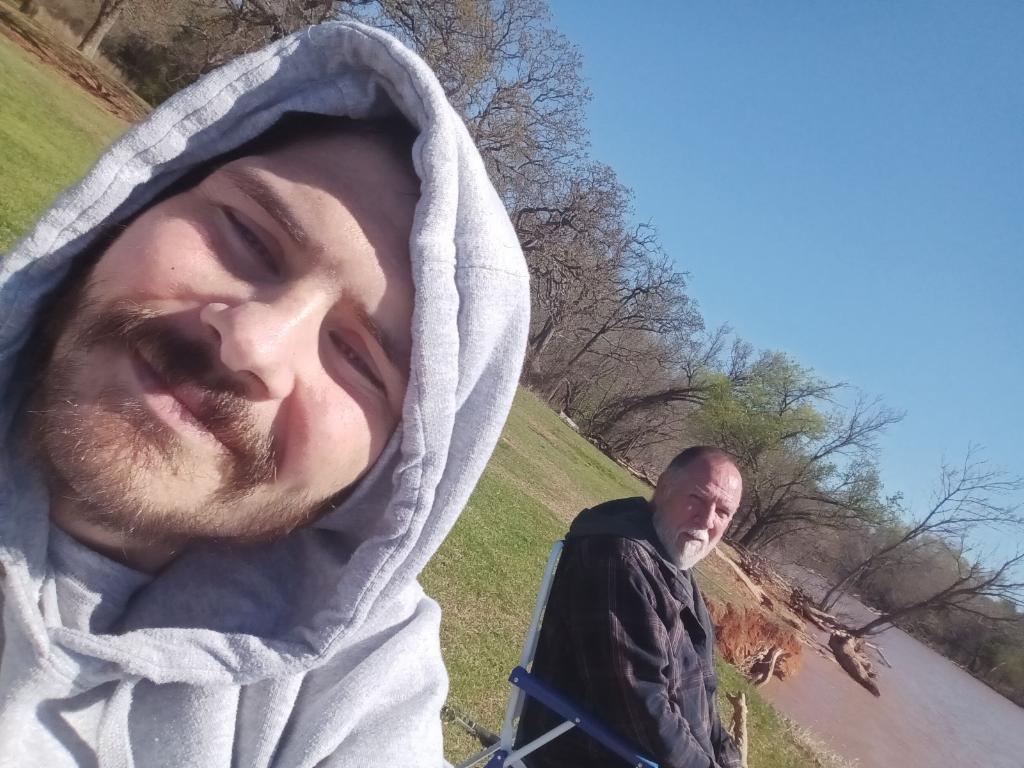
    Some of my favorite memories are the pictures Quinten would send me from the water.

    A smiling selfie.

    A fish proudly held up for the camera.

    A simple text that let me know they were having another good day together.

    At the time, they felt like any ordinary day.

    Now I know they were anything but ordinary.

    When I saw Quinten’s fishing vest hanging in the truck, my heart understood something before my mind could put it into words.

    James isn’t trying to move on from those mornings.

    He’s carrying them with him.

    Every time he opens the truck door, he sees more than a fishing vest.

    He sees Quinten.

    He remembers early mornings and quiet conversations.

    He remembers a young man who loved being on the water, loved spending time with him, and found joy in the simple things.

    People often ask what grief looks like after losing someone you love.

    Sometimes it looks like tears.

    Sometimes it looks like silence.

    And sometimes…

    It looks like a fishing vest hanging on the passenger seat.

    There is something comforting about keeping certain things close.

    Not because we are living in the past.

    But because love leaves fingerprints on ordinary objects.

    A jacket.

    A coffee mug.

    A favorite chair.

    A fishing vest.

    These things become more than possessions.

    They become reminders of a life that mattered.

    A relationship that continues.

    A love that has not ended.

    Watching James quietly place that vest in his truck reminded me that men grieve differently than women.

    I often write.

    I tell stories.

    I speak Quinten’s name every chance I get.

    James carries his memories more quietly.

    Neither way is more right.

    Neither way loves more deeply.

    They’re simply different expressions of the same love.

    The same loss.

    The same longing.

    I don’t know how long that fishing vest will stay on the back of the passenger seat.

    Maybe weeks.

    Maybe months.

    Maybe years.

    And honestly, it doesn’t matter.

    Because every time James climbs into that truck, a small part of Quinten rides with him.

    Not in the vest itself.

    But in the memories it carries.

    Love has a remarkable way of attaching itself to ordinary things.

    And sometimes those ordinary things become extraordinary reminders that the people we love never truly leave us.

    They remain in our stories.

    They remain in our hearts.

    And sometimes…

    They remain on the back of a passenger seat, ready for one more fishing trip.

  • One year.

    Somehow, an entire year has passed since I held Quinten’s hand for the last time.

    A year since I whispered, “Go with God.”

    A year since I heard the words I miss most:

    “I love you, Momma.”

    People often say that time heals.

    I have learned that time doesn’t heal the loss of a child.

    It teaches you how to carry it.

    Over the past year, I have lived through emotions I never knew could exist together.

    There has been disbelief.

    How could my son really be gone?

    Even now, there are moments when my mind forgets for just a second. I hear a funny story or see something that would have made Quinten laugh, and my first thought is that I can’t wait to tell him.

    Then reality gently, and sometimes painfully, reminds me.

    There has been anger.

    Not the kind that lashes out at others.

    The quiet kind.

    The kind that asks why cancer had to steal the life of a man who loved so deeply, laughed so freely, and found joy in the simplest things.

    The kind that grieves the birthdays, holidays, fishing trips, and ordinary Saturdays that will never happen again.

    There has been overwhelming sadness.

    The kind that settles into places words cannot fully describe.

    The sadness of missing one more hug.

    One more conversation.

    One more Saturday afternoon.

    One more chance to hear him say,

    “I love you, Momma.”

    That longing has not disappeared.

    I don’t believe it ever will.

    Because love doesn’t end when life does.

    If anything, love becomes even more visible in the ache that remains.

    But this year has also surprised me.

    Not because the grief became smaller.

    It hasn’t.

    But because healing quietly began to appear in places I wasn’t expecting.

    Our family has grown closer.

    Losing Quinten reminded us how precious each other truly are.

    We have leaned on one another.

    Held one another.

    Laughed together.

    Cried together.

    And somehow, together, we’ve found the strength to keep taking the next step.

    I have found healing in hugs.

    Simple hugs.

    The kind that don’t fix anything but somehow remind me I’m not carrying this alone.

    And I have found joy in the eyes of my grandsons, Lincoln and Everett.

    Their laughter doesn’t replace what was lost.

    Nothing ever could.

    But it reminds me that love continues.

    Life continues.

    Hope continues.

    I see pieces of our family’s future reflected in them, and for that, I am deeply grateful.

    People sometimes talk about “getting back to normal.”

    I’ve learned there is no returning to normal after losing a child.

    No matter how old they are.

    My normal included Quinten.

    He was woven into my everyday life.

    My Saturdays.

    My phone calls.

    My conversations.

    My celebrations.

    My heart.

    When he died, that version of normal died too.

    So this past year has not been about finding my old life again.

    It has been about searching for a new normal.

    One where I carry both unimaginable loss and enduring love.

    One where grief walks beside gratitude.

    One where tears and laughter can exist in the same day.

    One where I continue to honor my son by speaking his name, telling his stories, and living a life that reflects the love he gave so freely.

    I know I will grieve Quinten for the rest of my life.

    Not because I am unable to move forward.

    But because I will always be his mother.

    That part of me did not end when his life did.

    It never will.

    If anything, this first year has taught me that grief is not something to overcome.

    It is love that has nowhere to go.

    So I will keep loving him.

    I will keep missing him.

    I will keep telling his stories.

    I will keep saying his name.

    Because Quinten mattered.

    He still matters.

    And he always will.

    One year has passed.

    Not a day has gone by that I haven’t loved him.

    Not a day has gone by that I haven’t missed him.

    And not a day will ever come when that changes.

    Until we meet again, my sweet boy…

    I love you, too.

  • Today marks three years since James and I drove to get Quinten and take him to the emergency room.

    At the time, we thought we were dealing with a temporary emergency.

    Something that would be diagnosed, treated, and eventually become just another story we would tell.

    We had no idea that morning would divide our lives into before and after.

    What followed was nearly two months of tests, scans, procedures, waiting, and unanswered questions.

    Every appointment seemed to bring another possibility, another theory, another reason to hope.

    Until finally, we had an answer.

    Quinten had testicular cancer.

    Not the type most people hear about.

    He was diagnosed with a rare and aggressive yolk sac tumor, a form of testicular cancer that is especially uncommon in adults.

    In an instant, everything changed.

    We were immediately referred to the OU Stephenson Cancer Center, where an incredible team began fighting alongside Quinten.

    The doctors were honest.

    Without treatment, he may have had only a few weeks to live.

    Instead, treatment gave us something I will forever be grateful for.

    Two years.

    And two weeks.

    Looking back now, those two years feel both impossibly short and incredibly full.

    Cancer became part of our everyday life.

    Appointments.

    Scans.

    Medications.

    Surgeries.

    Lab work.

    Waiting rooms.

    Conversations no family ever hopes to have.

    But somehow, cancer never became who Quinten was.

    He refused to let it.

    He lived.

    He laughed.

    He planned fishing trips.

    He bought flowers for his porch.

    He wore a dinosaur costume to Walmart simply because it made people smile.

    He celebrated birthdays.

    He loved his family with everything he had.

    Most remarkably, he never complained.

    Not once did I hear him ask,

    “Why me?”

    He accepted each challenge with a quiet courage that still amazes me.

    Of course, there were difficult days.

    Days of disappointment.

    Days when treatment was hard.

    Days when hope felt fragile.

    But even then, Quinten chose gratitude more often than bitterness.

    He chose to live the life he still had instead of mourning the life cancer threatened to take away.

    As his mother, those two years were the most heartbreaking years of my life.

    They were also among the most beautiful.

    Because when you know time may be limited, ordinary moments become extraordinary.

    Saturday family dinners became sacred.

    Simple conversations became treasured memories.

    Fishing trips became gifts.

    Every laugh carried a little more meaning.

    Every hug lasted a little longer.

    Cancer taught us something none of us wanted to learn.

    Tomorrow is never guaranteed.

    But it also taught us something I hope I never forget.

    Life isn’t measured only by how long we live.

    It’s measured by how deeply we love.

    By how fully we embrace the people around us.

    By how much joy we choose, even when life is unimaginably hard.

    Three years ago today, I believed we were simply going to the hospital.

    Instead, we began the hardest journey our family has ever walked.

    If someone had told me then what the next two years would hold, I don’t know how I would have found the strength to take that first step.

    But God, in His mercy, only gave us one day at a time.

    And together, we lived those days.

    Today, I miss Quinten more than words can express.

    I wish cancer had never entered our lives.

    I wish our story had ended differently.

    I wish he were still here.

    But alongside those wishes is something else.

    Gratitude.

    Profound gratitude.

    Because we were given two years we almost didn’t have.

    Two years filled with memories that cancer could never take away.

    Two years of witnessing extraordinary courage.

    Two years of loving my son a little more intentionally because we understood how precious each day had become.

    Cancer eventually took Quinten’s life.

    But it never took his spirit.

    It never took his kindness.

    It never took his joy.

    And it never took the love our family shared.

    For that, I will be forever thankful.

    Those two years were heartbreaking.

    They were beautiful.

    And I would choose every one of them again.

  • I recently saw this cartoon that stopped me in my tracks.

    “Oh no. Here comes Janie. She’s the one who’s always talking about her dead son.”

    The cartoon was meant to make people think.

    It certainly made me think.

    Because if I’m being honest, sometimes I’m afraid I am Janie.

    I talk about Quinten a lot.

    I write about him.

    I share stories about him.

    I mention his name in conversations.

    I tell people about his dinosaur costume trips to Walmart, his love of fishing, his cherry Dr. Peppers from Sonic, his camping trips, and the way he could make an ordinary day feel special.

    And sometimes I wonder:

    Do people get tired of hearing about him?

    Do they see my name appear and think,
    “Here she goes again.”

    Do they quietly wish I would move on to something else?

    It’s a painful question.

    Not because anyone has ever said those words to me.

    But because grief has a way of making you self-conscious about your love.

    When someone dies, especially a child, the world slowly stops talking about them.

    People move on.

    Life continues.

    New topics replace old ones.

    But for a parent, that isn’t what happens.

    Quinten isn’t a memory I occasionally visit.

    He’s my son.

    He will always be my son.

    The relationship didn’t end when he died.

    It changed.

    The truth is, I don’t talk about Quinten because I can’t accept his death.

    I talk about him because I love him.

    I talk about him because he mattered.

    I talk about him because he still matters.

    If he were alive, no one would think twice about me mentioning him.

    Parents talk about their children all the time.

    We share stories.

    We celebrate accomplishments.

    We laugh about funny moments.

    We tell people who they are.

    Death changes many things.

    But it shouldn’t require silence.

    One of the hardest realities of grief is realizing that the people who knew and loved your child are grieving too, but many others have quietly returned to their normal lives.

    And while that’s understandable, it can leave grieving parents feeling like they are carrying the responsibility of keeping their child’s memory alive.

    Sometimes that responsibility feels heavy.

    Sometimes it feels lonely.

    And sometimes it makes me wonder whether I’m becoming “Janie.”

    But then I think about something else.

    What if Janie isn’t the problem?

    What if the problem is that our culture is uncomfortable with grief?

    What if we’ve become so accustomed to treating loss as something private and temporary that we struggle when someone’s love continues to be visible?

    What if Janie simply misses her son?

    What if telling his stories is how she carries him forward?

    What if speaking his name is an act of love?

    Because that’s what it feels like to me.

    Every time I tell a story about Quinten, I get to spend a few more moments with him.

    For a brief time, he’s present again.

    Someone laughs at one of his adventures.

    Someone learns about his kindness.

    Someone sees the man he was beyond his cancer.

    And that matters.

    It matters more than I can explain.

    So yes, sometimes I worry that I’m Janie.

    I worry about taking up too much space.

    I worry about making people uncomfortable.

    I worry that others are tired of hearing about my son.

    But I have come to this conclusion:

    I would rather risk being Janie than stop talking about Quinten.

    Because silence feels far more frightening than repetition.

    Silence feels like disappearance.

    And Quinten deserves better than that.

    He lived boldly.

    He loved deeply.

    He brought joy wherever he went.

    His life mattered.

    His story matters.

    And as long as I have breath in my lungs, I will keep telling it.

    Not because I am stuck.

    Not because I refuse to move forward.

    But because love still has something to say.

    And I hope it always will.

  • One of the strangest things about grief is that the world expects you to keep going.

    The bills still arrive.

    The emails still come.

    The meetings still happen.

    The deadlines don’t move.

    And somehow, after losing someone you love, you’re expected to return to work as though your heart hasn’t been shattered.

    I remember how impossible that felt.

    After Quinten died, I woke up one morning and realized the world had continued turning without him.

    People were heading to work.

    Businesses were opening.

    Life was moving forward.

    But I wasn’t ready.

    Part of me wanted time to stop.

    Part of me wanted the world to recognize that something monumental had happened.

    My son was gone.

    How could anything else possibly matter?

    Yet work remained.

    And so I did what many grieving people do.

    I showed up.

    Not because I was ready.

    Not because I was healed.

    But because life required it.

    What surprised me most was how grief followed me into every part of my workday.

    I could be answering an email and suddenly think of Quinten.

    I could be sitting in a meeting and find myself remembering a conversation we had.

    A song would play.

    A memory would surface.

    A date on the calendar would trigger a flood of emotions.

    Grief does not stay neatly at home while you go to work.

    It comes with you.

    It sits quietly beside you.

    Sometimes it whispers.

    Sometimes it roars.

    Some days I could focus.

    Other days I was simply trying to make it through the next hour.

    And I learned something important:

    Grief makes ordinary tasks harder because grief itself is work.

    The world sees someone sitting at a desk.

    What it doesn’t see is the emotional labor happening underneath.

    The effort it takes to concentrate.

    The energy required to hold back tears.

    The constant adjustment of carrying loss while trying to function.

    People often ask grieving individuals when they will return to normal.

    The truth is, there is no normal to return to.

    The person who existed before the loss is gone too.

    Grief changes us.

    Not because we want it to.

    Because love changes us.

    And when someone we love dies, we carry that change into every room we enter—including the workplace.

    Over time, I learned that productivity wasn’t the goal.

    Survival was.

    Some days success looked like completing my work.

    Other days success looked like simply showing up.

    Both mattered.

    Both counted.

    If you are grieving while working, I want you to know this:

    You are carrying far more than most people can see.

    Give yourself grace.

    Take breaks when you need them.

    Understand that concentration may come and go.

    And remember that grief is not a sign of weakness.

    It is evidence of love.

    There will be days when work feels impossible.

    There will be days when you surprise yourself.

    There will be moments when you laugh with a coworker and immediately feel guilty.

    There will be moments when your heart breaks in the middle of an ordinary Tuesday.

    All of it is normal.

    All of it is part of learning how to live in a world that has changed forever.

    I still miss Quinten every day.

    Work did not change that.

    Time did not erase that.

    But I have learned that grief and purpose can exist together.

    Sadness and responsibility can coexist.

    Love and loss can travel alongside us wherever we go.

    Even into the workplace.

    And some days, simply showing up is an act of courage.

    On those days, that is enough.

  • One of the strangest parts of grief is the guilt that can come with having a good day.

    No one really talks about that part.

    People talk about sadness.
    About crying.
    About heartbreak and loneliness.

    But they don’t often talk about the moment you laugh again and immediately feel guilty for it.

    Or the moment you catch yourself enjoying something, a conversation, a sunny afternoon, a family dinner, and suddenly feel like you’ve betrayed the person you lost simply because you experienced joy without them.

    I have felt that guilt.

    After losing Quinten, there were days when I smiled at something my grandchildren did or found myself genuinely enjoying a moment with family. And almost immediately afterward, grief would whisper something painful into my heart:

    How can you still laugh when he is gone?

    That feeling can be incredibly confusing.

    Because the truth is, grief and joy often exist together.

    One does not cancel out the other.

    Loving your life again does not mean you loved your child any less.

    Smiling does not mean you stopped missing them.

    And healing does not mean forgetting.

    But when you lose someone so deeply woven into your everyday life, especially a child, happiness can feel unfamiliar at first. Almost unsafe.

    There is a part of you that feels like staying sad somehow honors them more.

    As if carrying constant pain proves the depth of your love.

    I think many grieving parents silently wrestle with this.

    We wonder if moving forward means leaving them behind.

    We fear that moments of peace somehow diminish the significance of the loss.

    But I’m slowly learning something important.

    Love does not ask us to stop living.

    And the people we love most would never want their memory to become a prison we cannot step outside of.

    Quinten lived boldly and happily, even while facing cancer. He found joy in ordinary moments, fishing trips with James, flowers on his porch, shopping trips in his dinosaur costume, laughing with family, and stopping at Sonic for a cherry Dr. Pepper.

    He truly lived.

    And when I remember that, I realize something:

    Honoring him does not mean refusing joy.

    It means learning to carry his love into the life that still remains.

    Some days, that feels easier than others.

    There are still moments when happiness catches me off guard, and grief rushes in behind it.

    But maybe healing is not about choosing one or the other.

    Maybe it’s about allowing both to exist.

    Grief and gratitude.

    Sorrow and laughter.

    Longing and love.

    Because losing someone you love changes you forever, but it does not erase your ability to experience beauty, connection, or hope.

    In fact, grief often deepens those things.

    It teaches you how precious ordinary moments really are.

    And maybe that’s one of the hardest and most beautiful truths of all:

    A good day after a loss is not a betrayal.

    It is evidence that love is still alive inside you.

    And perhaps, in some quiet way, the people we miss most are still part of those good days too.

    Not physically.

    But through the love they left behind.

    The laughter they gave us.

    The memories they planted inside our hearts.

    I will always grieve Quinten.

    That will never change.

    But I am beginning to understand that allowing myself to smile, to laugh, to live, is not moving away from him.

    It is carrying him forward into the life I still have left to live.

    And I think that is exactly what love would want us to do.