
The Rose Rocks Beneath the Twin Oaks
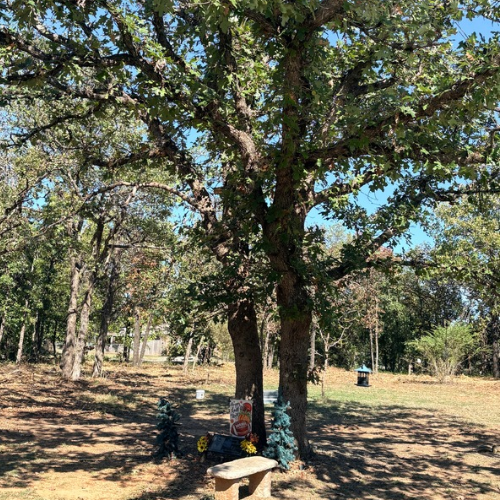
Before my son Quinten died, he told us exactly where he wanted to be buried.
Beneath the twin oak trees on our land.
Not in a cemetery somewhere away from home, but here, on the property where he had lived, where our family had gathered, and where so many of our memories had been made.
He knew the exact spot.
And he wanted that to be his final resting place.
It was one of his final wishes.
And we were able to honor it.
Of all the things I couldn’t do for my son, all the things I couldn’t change or fix or protect him from, this was something I could give him.
I couldn’t stop the cancer.
I couldn’t give him the years he should have had.
I couldn’t save his life.
But I could make sure he rested where he wanted to be.
And for that, I will always be grateful.
There is a particular kind of comfort in knowing that when I walk to his grave, I am going to a place he chose.
I don’t have to wonder whether this is where he would have wanted to be.
I know.
He told us.
And we listened.
Still, I never imagined that the land where our family lived, laughed, and made memories would become the place where I would bury my child.
I never imagined that I would be able to walk to my son’s grave.
But now I do.
And even though I am grateful we fulfilled his wish, there are days when I stand beneath those trees and struggle to comprehend that my son is buried there.
Quinten should still be here.
He should still be walking across the driveway, coming to Saturday dinner, laughing with his family, and making plans for tomorrow.
He should still be living the life that cancer took from him.
Instead, I visit him beneath the twin oaks.
Sometimes I talk to him.
Sometimes I stand quietly.
Sometimes I simply look at the place where he rests and wonder how this became part of my life.
And sometimes, when I’m standing there, I look down and discover something unexpected.
A rose.
Not a flower someone has brought to his grave.
A little rose made of stone.
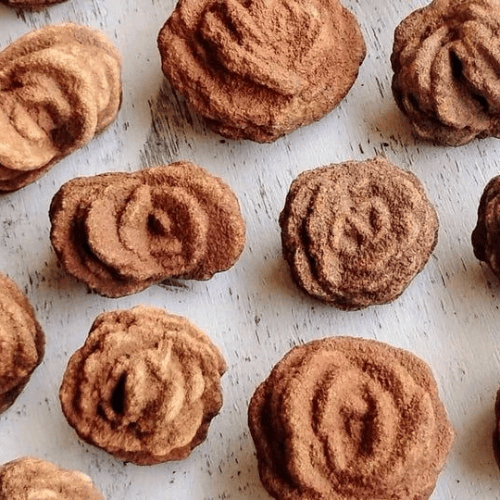
There are roses growing on our land that will never bloom.
They have no stems. No leaves. No fragrance.
They are made of stone.
Throughout our property here in Oklahoma, we have rose rock formations. Some are tucked into the dirt, barely noticeable. Others reveal themselves more easily, their delicate-looking petals formed from something far stronger than any flower.
I’ve always enjoyed finding and collecting them.
I pick them up, brush away the dirt, and turn them over in my hands, admiring the little formations that look so much like roses.
But since losing Quinten, they have taken on a meaning I never could have imagined.
Because some of the most meaningful rose rocks I find are right there at his gravesite.
Beneath the twin oaks.
In the very place he chose.
I don’t know how long each one has been there. I don’t know how many times I might have walked past it before noticing.
But when I find one, I stop.
I bend down and pick it up.
I brush away the soil.
And for a moment, I hold something beautiful that came from the same earth where my son rests.
There is something about that which I cannot fully explain.
It doesn’t take away my grief.
It doesn’t make the grave less painful to visit.
But it gives me a small moment of comfort in a place where I feel his absence so deeply.
The earth that holds my son also holds these little roses.
And somehow, that matters to me.
Oklahoma rose rocks are extraordinary creations of nature.
Formed roughly 250 million years ago, these clusters of barite crystals developed into shapes that resemble rose petals. Their reddish-brown coloring comes from iron-rich sediment surrounding them.
Think about that for a moment.
Millions of years.
Long before our home stood here. Long before our family gathered for Saturday dinners. Long before Quinten walked this land.
These little stone roses were forming beneath the earth.
And now, all these years later, I find them scattered across the same ground where my son lived and where he rests.
They aren’t perfect.
Some have beautifully defined petals. Others are rough, uneven, or only partially formed. Some are small enough to fit comfortably in my palm, while others are part of larger formations.
But each one is a rose.
And I think there’s something important in that.
Grief isn’t beautiful in the way people sometimes try to describe it.
There is nothing beautiful about watching your child suffer. Nothing beautiful about hearing that treatment is no longer working. Nothing beautiful about knowing that the time you have left together is running out.
And there is certainly nothing beautiful about burying your son.
I would trade every lesson grief has taught me to have Quinten back.
But love?
Love can remain beautiful even when the circumstances surrounding it are unbearable.
Perhaps that’s what these stones remind me of.
Something can be rough and imperfect and still hold something precious.
Something can endure long after the world around it has changed.
There is a legend associated with Oklahoma’s rose rocks that has taken on a deeper meaning for me.
A story often called the Cherokee Rose Rock Legend connects these formations to the sorrow of the Cherokee people during the Trail of Tears.
In versions of the legend, tears shed during that devastating journey became roses of stone, preserving sorrow and remembrance in the earth.
The story is widely repeated as folklore, although its origins and attribution are uncertain. The forced removal of the Cherokee people was a real historical tragedy, and their suffering deserves to be remembered with respect.
Still, the image of tears becoming something enduring speaks to something I recognize in my own life.
Because grief doesn’t simply disappear.
It becomes part of us.
It settles into our memories, our traditions, our homes, and the places where we once stood beside someone we loved.
Sometimes it changes the way we see the world.
And sometimes it changes the meaning of something as ordinary as a rock lying in the dirt.
I cannot turn my tears into roses.
But I understand the longing to have something tangible remain after so much has been taken away.
Something I can touch.
Something I can hold.
Something that reminds me that love has not disappeared simply because the person I love is no longer here.
When I find a rose rock near Quinten’s grave, I always stop.
I turn it over in my hand, studying the little ridges and petals.
And for a moment, I am completely present.
There is something comforting about holding something solid when so much of my life has felt uncertain.
Since Quinten died, I have learned how quickly everything can change.
One day, your son is walking across the driveway.
He’s coming to Saturday dinner. He’s laughing with his family. He’s living his life.
And then, one day, he isn’t.
The driveway is still there.
The land is still there.
The twin oak trees are still there.
But the world you knew has disappeared.
I think that’s part of why I find comfort in these rose rocks now.
They give me something I can hold.
Not because they can take away my grief.
Nothing can do that.
Not because I believe they have some special power to heal a broken heart.
But because they come from the very ground where my son rests.
From the land we shared.
From the place he chose.
I don’t believe the rocks are there to explain my grief.
They cannot tell me why Quinten died.
They cannot make me miss him less.
But they have become meaningful to me in a way I never expected.
Every time I find one beneath those twin oaks, I am reminded of two things.
I was able to honor one of Quinten’s final wishes.
And the love I have for him is still very much alive.
We often think of roses as delicate.
Their petals bruise. Their blooms fade. Eventually, they fall apart.
But a rose rock is different.
It looks like a flower, yet it has endured an unimaginable passage of time.
And that makes me think about the love I have for Quinten.
His life ended.
My love for him didn’t.
It is not fading with the passing months.
It is not becoming less important as the calendar moves forward.
It is not something I will eventually put away because enough time has passed.
It is simply learning to live in a world where he is no longer physically here.
My love for Quinten lives in our Saturday dinners.
In the memories we share.
In the sound of his voice that I still hear in my mind.
In the laughter I remember.
In the words I will always treasure.
“I love you, Momma.”
It lives in the places he loved.
In the traditions he was part of.
In the family that continues to carry his memory forward.
And it lives beneath the twin oaks, where I can still go and speak his name.
Perhaps now, it lives a little in the rose rocks I gather from the ground around him.
Not because the stones contain his love.
But because they remind me of mine.
And sometimes, when grief feels too heavy to put into words, having something meaningful to hold is enough for that moment.
I wonder how many rose rocks are still buried beneath our feet.
How many are waiting to be uncovered by rain, shifting soil, or someone willing to look closely.
I wonder how many are still resting quietly near Quinten, beneath the twin oak trees.
It makes me think about grief and the memories we carry.
Some memories are right on the surface.
Others stay buried until something unexpectedly brings them back.
A song.
A familiar smell.
A particular Saturday afternoon.
A rock shaped like a rose.
And suddenly, there it is.
A memory we didn’t know we needed that day.
I cannot bring Quinten back.
I cannot change the ending of his story.
I cannot give him the future he should have had.
But I can continue finding ways to keep his memory present in mine.
Maybe I’ll begin setting aside the rose rocks I find at his gravesite in a special place.
Maybe one will sit beside his photograph.
Maybe someday I’ll give one to someone who needs a reminder that love doesn’t end when life does.
For now, I will keep walking our land.
I will keep looking for the little roses hidden in the earth.
I will keep visiting my son beneath the twin oaks he chose.
And when I find a rose rock near his grave, I will pick it up, brush away the dirt, and hold it for a little while.
Because there is something comforting about knowing that the place where my son wanted to rest continues to give me something beautiful to discover.
It doesn’t make the loss easier.
It doesn’t make the grave less painful to visit.
But it gives me a small moment of connection in a place where I feel his absence so deeply.
I couldn’t give my son more time.
But I could give him the resting place he chose.
And now, beneath those twin oaks, in the very ground where he wanted to rest, I keep finding roses.
Not the kind that bloom and fade.
The kind that endure.
Just like my love for him.
Walking with love after loss.
The Q Life Grief Journey


Leave a Reply