There are words that linger long after they’re spoken, soft echoes that settle into the heart and stay there. For me, it’s the sound of Quinten’s voice saying, “I love you, Momma.”
He said it often. It wasn’t something he saved for special occasions or dramatic moments; it was just part of who he was. Whether he was heading out the door, finishing a phone call, or telling him goodnight at the end of the day, those were the words he left me with. Simple, steady, and full of love.
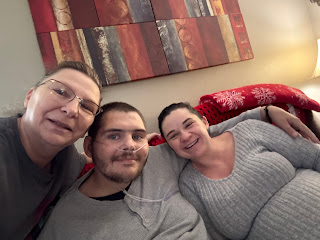
Even at 34, my youngest child, my only boy, was still a Momma’s boy, and he never tried to hide it. There was a sweetness in that, a tenderness that time never took away. No matter how grown he became, that bond between us stayed just as strong, just as gentle.
The morning of the day he passed away, he said it one last time. I didn’t know then how precious those words would become, how they would echo in my heart in the quiet hours when I miss him most. I still hear them, sometimes in memory, sometimes in the stillness of the day as if he’s reminding me he’s close.
There’s comfort in that. Because love like that doesn’t end; it simply takes on a new form. It finds new ways to reach you in a moment of peace, a warm memory, a whisper when you need it most.
And though I can’t hear his voice the way I used to, I carry those words with me always:
I love you, Momma. The most beautiful words he ever gave me.
Quinten went on hospice on April 15, 2025. He passed away exactly three months later, on July 15, 2025.
That date, April 15th, is etched into me. Not because we expected it to change everything, but because it did.
James and I took Quinten to his appointment at the OU Stephenson Cancer Center that day, believing it would be routine. Quinten had been taking a chemotherapy pill meant to slow the cancer’s growth and spread. His recent lab work showed his AFP tumor marker had increased, so we assumed the doctors would adjust his medication or try something new, understanding that this cancer was stubborn, but still believing there were options.
We were not prepared for what we were told.
Because of the significant rise in his AFP tumor marker, the doctors explained that there was nothing more they could do to treat the cancer. No medication to increase. No alternative chemotherapy to try. The next step was hospice care and a referral to the research study department.
I remember sitting there, hearing the words but not fully understanding how they could be real.
In that moment, I remembered something we were told at the very beginning, back in the fall of 2023: if they couldn’t get rid of all the cancer, it would come back, and when it did, it would come back with a vengeance and spread quickly.
I knew this intellectually. I just didn’t expect it to happen so soon.
From the start, Quinten’s cancer journey had been complicated and frightening. His very first round of chemotherapy had to be given in the hospital because the cancer was already advanced. He was given three extremely strong chemotherapy drugs and monitored closely. On the third day, Quinten went neurotoxic. He couldn’t communicate. He seemed lost somewhere far away in his mind.
Doctors rushed in and immediately administered the antidote. We didn’t know if he would recover. His body was swollen from fluid overload, but that felt secondary to the fear that we might lose him, the person we loved, even if his body survived.
Then, on the second day, he recognized James and me. His speech was slurred, but he was communicating again.
The relief was overwhelming.
Over the next few days, he improved significantly. They completed his chemotherapy, minus the drug that caused the neurotoxicity. But without all three drugs, his chances of eliminating the cancer were reduced. This rare form of testicular cancer, a yolk sac tumor in an adult, is difficult to cure even when caught early. Now, without a key chemotherapy drug, a cure was no longer possible.
Still, Quinten wasn’t done fighting.
He chose to continue treatment, opting for three more months of inpatient chemotherapy. He was determined to gain time, valuable time, and live his life as fully as he could. For three months, our routine became one week in the hospital followed by three weeks at home. Labs. Appointments. Scans. Waiting.
And for a while, things looked hopeful. The fluid came off quickly after his first round. New scans showed that most of the cancer was gone from his abdomen and lungs. The remaining testicle with cancer was removed to improve his chances. His kidneys were holding on thanks to stents, though we learned those would need to be changed in surgery every three months to keep his kidneys functioning.
Despite everything, Quinten was happy. He was willing. He was brave.
He accepted whatever was required of him because he wanted to live. He wanted time. He wanted moments. He wanted life.
That is what makes April 15th so devastating.
That was the day we were told the fight had shifted, not because Quinten had given up, but because his body had reached its limit. Hospice did not mean he stopped fighting. It meant the fight changed.
Even in hospice, Quinten was brave. He was determined. He gave it everything he had until the very end.
He lived only three months in hospice. But in those final months at home, he showed us what courage looks like. What love looks like. What it means to keep choosing life, even while preparing to let go.
Hospice entered our story that day, but it did not erase who Quinten was. It simply marked the beginning of our final chapter together, one written with honesty, tenderness, and an unfathomable amount of love.
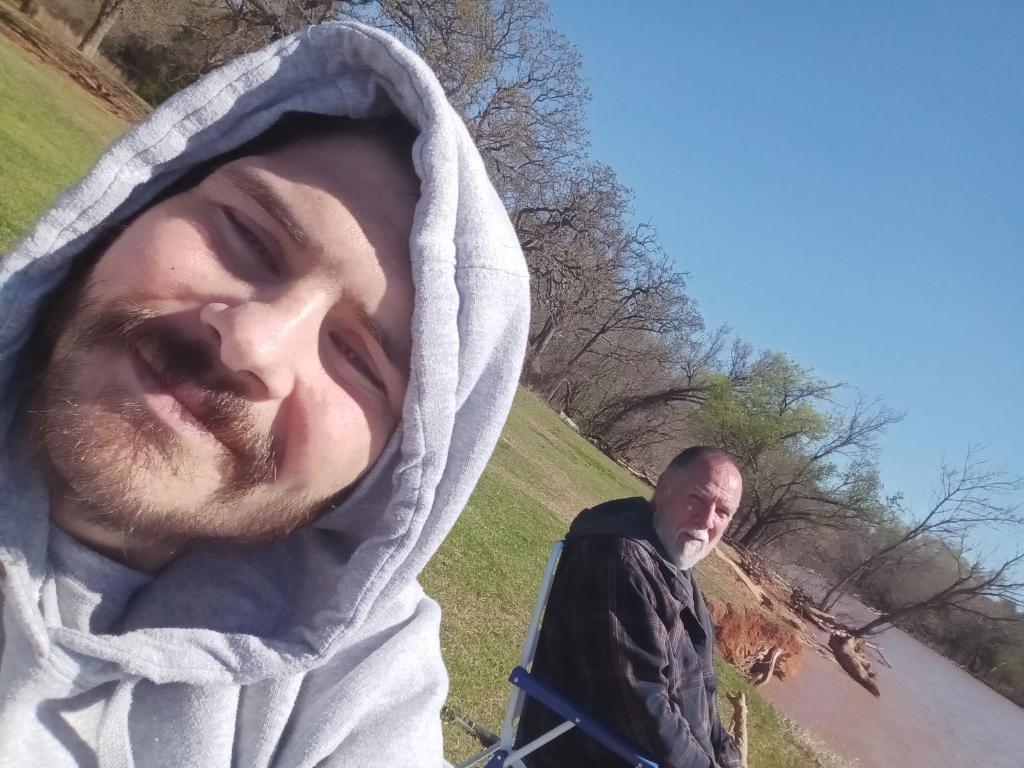
For as long as I can remember, Quinten loved being near the water with a fishing pole in hand. But what made fishing truly special for him wasn’t just the quiet of the lake or the thrill of catching something; it was who he got to share it with: James.
James was more than a stepfather to Quinten. He was a friend, a guide, and the earthly father Quinten had longed for since losing his own dad at the age of six. After marrying James, something in Quinten’s heart was restored. That missing piece, that father-son connection, was finally found.
As the years went on, and especially during Quinten’s illness, James became his anchor. They were inseparable through the hard parts, chemo treatments, labs, and countless doctors’ visits, but James gave Quinten something even more important than care. He gave him companionship, laughter, and the steady love only a father can give.
And for Quinten, their fishing trips together were pure joy. Sitting side by side at the lake, lines in the water, he could forget about cancer for a little while. Out there, it wasn’t about illness or struggle. It was about being two buddies at the water’s edge, swapping stories, sharing laughter, and soaking in the peace of the great outdoors.
Fishing gave Quinten more than a hobby. It gave him moments of freedom, connection, and joy, moments he deeply valued, because they were shared with James.
Looking back, I know Quinten treasured those times most of all. Fishing with James wasn’t just his favorite activity; it was a reminder of the love and fatherhood he had always longed for, and the bond that carried him through the hardest of days.
Christmas is quickly approaching, and the world seems to be moving toward joy, lights on, music playing, people talking about traditions and plans. But for me, this season feels different now. It carries a weight I’ve never known before, because this will be the first Christmas without Quinten.
I’ve always known Christmas as a time of gathering, warmth, laughter, food, and familiar faces. Quinten was woven into all of it. His presence, his hugs, his way of being in the room made the holiday feel complete. And now, everywhere I look, I see the place where he should be.
Grief has a way of changing even the most cherished traditions. Things that once brought comfort can now bring tears. Decorations feel heavier. Songs land differently. Even the calendar feels cruel as it marches toward a day that can never look the same again.
I find myself wondering how to do Christmas now. How to honor the joy without feeling disloyal to the grief. How to create moments for the rest of the family while carrying the ache of his absence.
Some days, I want to skip it altogether. Other days, I want to hold it close, not as it used to be, but as it must be now. Slower. Softer. With room for tears as well as love.
I know Quinten would never want Christmas to be only sad. He was too full of life, too full of fun, too full of love for that. And so, I’m learning that this first Christmas isn’t about pretending everything is okay. It’s about allowing it to be exactly what it is, tender, imperfect, and deeply meaningful.
There will be moments when the grief feels sharp. Moments when I miss his hugs so badly that it takes my breath away. And there will also be moments when love rises up in memories, in quiet laughter, in the presence of those who are still here.
This Christmas won’t look like the ones before. And that truth hurts. But it is also a reminder of how deeply Quinten was loved, and how much his life mattered.
As this first Christmas approaches, I’m holding space for both the sorrow and the love. I’m learning that even in the absence, love still shows up. It just does so differently now.
And so, I will walk into this holiday gently. With an open heart. With grace for myself. And with the quiet hope that love, his love, will still find its way into our home.
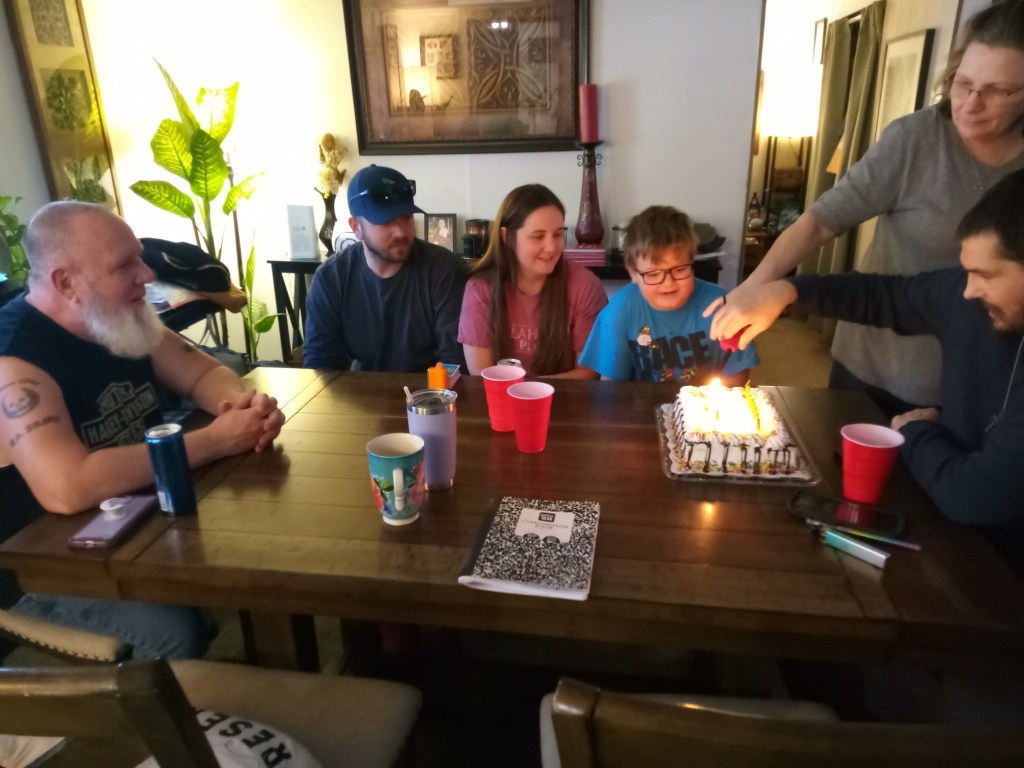
Birthdays were always special to Quinten. It didn’t matter whose name was on the cake; he approached each celebration with the same joy and enthusiasm. He loved the dinners, the laughter around the table, the sweetness of cake, and the tradition of singing “Happy Birthday.” For him, birthdays weren’t just about marking another year; they were about gathering, sharing love, and making sure everyone felt celebrated.
This photo captures one of those moments that now means so much: Quinten blowing out candles alongside his nephew, Lincoln, whom he loved dearly. Their bond was undeniable, filled with laughter, inside jokes, and shared traditions. To see them side by side, celebrating together, is a reminder of the joy Quinten poured into every relationship.
Saturday family dinners were the setting for these birthday moments. Quinten would arrive with a smile, eager to see everyone, ready to make the day brighter. He had a gift for making people feel special, for turning ordinary evenings into treasured memories.
Now, as I look back, I see more clearly the legacy he left us. Quinten showed us that celebrations aren’t about perfection or grandeur; they are about presence. They are about showing up, laughing loudly, and finding joy in the company of those we love.
Even in the midst of his own battles, Quinten never let go of that joy. He reminded us, week after week, that life is worth celebrating, and that the people we gather with are what make those celebrations sacred.
And that is how I will always remember him, not just in the birthdays he loved, but in the way he taught us all to celebrate life itself.
Some people find comfort in routines, but for our family, Saturday has become something much more; it’s a tradition, a rhythm of love. For years now, my husband and I have cooked dinner and dessert on Saturdays, opening our table to any of our family members who are able to join us. It’s simple, but it’s one of the things that makes life rich.
For Quinten, Saturday quickly became his favorite day of the week. Without fail, he would show up right at noon, the exact moment the city tests its tornado sirens. In fact, we all came to think of that siren as “the Quinten signal.” When we heard it, we knew we’d soon see him walking through the front door, ready to laugh, eat, and share stories. He looked forward to asking everyone about their week.
Those afternoons were filled with good food, conversation, and always, always a game of Uno after dinner. The table would be filled with playful teasing, competitive streaks, and laughter that seemed to echo long after the cards were put away.
What I hold closest to my heart is not just the meals we shared but the joy Quinten brought with him each week. He never came just to eat; he came to be with us. He came to make memories. He came to make sure that family time was celebrated.
Now, when I hear the sirens on Saturday, I don’t just think of the city’s test. I think of Quinten’s smile, his presence, and the way he made Saturdays sacred. These gatherings, these traditions, are the kind of treasures that keep his spirit alive in our hearts.
It’s a reminder that family isn’t just who we are, it’s what we choose to show up for, week after week.
When I first adopted Lenny back in 2016, I thought I was just giving a little dog a second chance at life. His elderly owners had passed away, and he suddenly found himself without the people he loved. From the moment he curled into my lap, full of energy and affection, I knew he had found his home with me.
But what I didn’t know then was that Lenny’s true purpose was still waiting down the road.
In the fall of 2023, as Quinten faced the hardest battle of his life, he asked one simple question: could Lenny stay the night with him in his cabin? That one night turned into forever. From that moment on, Lenny never left Quinten’s side. He was his constant companion, curled up next to him, keeping him entertained with his quirky ways and offering comfort that only a loyal dog can give.
Lenny seemed to know, instinctively, what Quinten needed most. He wasn’t just a pet; he became a steady source of warmth and reassurance in the midst of pain and uncertainty. He stayed by Quinten’s side, faithfully, lovingly, until Quinten took his final breath.
Looking back, I realize that while I may have rescued Lenny all those years ago, he was always meant to rescue us in return. His purpose, as it turned out, was to walk with Quinten through his hardest days, to bring comfort where words could not, and to remind us all of the quiet miracles of love and loyalty.
Lenny was more than Quinten’s dog. He was his companion, his comfort, and in so many ways, his guardian.
Lenny and I are learning how to live without Quinten together.
Our first summer on the chicken farm, 2023, began with the promise of peaceful days and simple joys. But on June 30th, the eve of the 4th of July weekend, a phone call shattered that tranquility, forever altering our lives.
An unfamiliar number flashed on my phone screen. Usually, I’d ignore it, but an unsettling intuition compelled me to answer. It was a nurse calling about my 34-year-old son, Quinten. Since Easter, I’d sensed something was amiss. He wasn’t himself, a subtle but persistent worry gnawing at me.
The nurse, from a small-town hospital two hours west, explained that Quinten had arrived with a dangerously distended bladder, on the verge of rupture. After sedation, catheterization, and an ultrasound, they discovered a mass in his pelvis. Due to the holiday weekend, she advised us to retrieve him and seek care at a larger city hospital.
The two-hour drive to pick him up was filled with apprehension. We were unprepared for the stark reality of his deteriorating health, so different from the image we held of Easter. We rushed him to a city emergency room, where initial assessments led to a referral to a urologist and discharge.
However, the reprieve was short-lived. Within two days, Quinten was back in the emergency room, writhing in agonizing pain. A series of ER visits, primary care appointments, and urology consultations followed, a frustrating and agonizing period of uncertainty.
It wasn’t until early September, when his kidneys began to fail, that the devastating truth emerged: Quinten had a rare and aggressive form of testicular cancer that metastasized to his lower abdomen, liver, and lungs. We were immediately referred to the OU Stephenson Cancer Center.
Amidst this chaos, our small cabin on the farm became a sanctuary. It provided Quinten with a place to live, a space to heal, and a sense of normalcy as he endured countless treatments, fighting for his life with unwavering courage.
Over two years have passed since that fateful phone call. Quinten’s strength and resilience were a constant source of inspiration. Each day he spent with us on the farm was a precious gift. We hold onto these moments, these shared experiences, with profound gratitude.
We are immeasurably thankful for every day we had with him.